


Tewksbury's Indigenous History
History
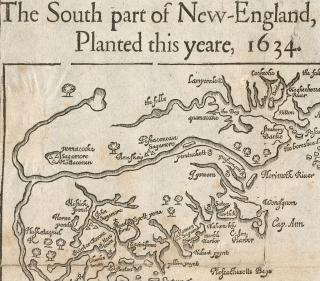
The land that became Tewksbury and the Merrimack Valley was inhabited by a number of different Native American tribes prior to colonization by Europeans, and they had inhabited this area for 12,000 years. These tribes had connections with the Algonquian and Abenaki nations. They went by a number of names based on changing leaders and alliances. They were known at various times as the Pennacook, the Pawtucket, the Wamesit, the Naumkeag, and other names. Other tribes in Massachusetts with whom they interacted were the Agawam, the Massachusett, the Nipmuck, and the Wampanoag. The word “Merrimack” comes from the Algonquian word “Merruasquamack” which means “swift water place”. The word “Wamesit” means “meeting place”. Archaeological evidence of indigenous habitation can be found in a collection of artifacts, including arrowheads and plummets, that were recovered by Mr. and Mrs. Robert Lacey from the former Folsom Farm or “Heath Brook Site” when it was being transformed into the shopping plaza near 1795 Main St. These artifacts are held in the library’s Local History Room.
One leader of the Pennacook and Pawtucket peoples was the sachem Passaconaway, who lived near modern day Lowell and led his people during the colonization of New England in the seventeenth century. As New England was colonized by Europeans, colonists exposed the indigenous people of the area to diseases such as smallpox, which resulted in the death of large swaths of their population. Though relations between the tribes and the colonists were sometimes amicable, the rapid expansion of European colonization in the area deprived Native people of their lands, disrupted their traditional seasonal migration patterns, and depleted the resources they had survived on for thousands of years. Christian missionaries converted many of the native people (some voluntarily, others involuntarily) and established “Praying Indian Villages” for them to live in, including Shawshin (Shawsheen) in Billerica and Wamesit and Pawtucket near the Merrimack and Concord Rivers.
In the 1670s, many of the remaining native tribes in New England united against the colonists under the sachem Metacom, who was called by the English “King Philip”, in a conflict known as “King Philip’s War”. The colonists triumphed and many of the native people living in the Merrimack Valley were displaced from their homes as a result. The Praying Indian Village of Wamesit was disbanded in 1677, a few years after the end of the war. Some native people fled north and assimilated with tribes in northern New Hampshire and Canada. Others were integrated into the society of the colonists, as servants, slaves, and laborers. Today, some residents of the Merrimack Valley still trace their roots to the native people of this area such as the Pennacook and Pawtucket, and have formed organizations; however they are not officially recognized tribes by the US government.
Resources
Merrimack Valley
- Chronological History, Tewksbury Historical Society, https://www.tewksburyhistoricalsociety.org/digital-collection/chronologi...
- Includes a description of the Praying Village at Wamesit.
- Indigenous New Hampshire Collaborative Collective, https://indigenousnh.com/
- Resources and information on the native history of New Hampshire.
- Lowell Historical Society Timelines, https://www.lowellhistoricalsociety.org/timeline/
- Timeline of the history of the Lowell area, starting prior to European colonization.
- “Native American History in the Merrimack River Drainage,” Town of Chelmsford, https://www.chelmsfordgov.com/NAH/history.html
- A history of the Merrimack River Valley’s native legacy, with a timeline and archaeological evidence.
- “Native American Archival Resources for the Merrimack Valley and Beyond,” University of Massachusetts-Lowell Library, https://libguides.uml.edu/c.php?g=1140991
- Guide to the history and resources about native history in the Lowell area, including websites, books, archaeological research, video presentations, and information on the Native American Signage Project.
Regional
- Brooks, Lisa. Our Beloved Kin: Remapping a New History of King Philip’s War, https://ourbelovedkin.com/awikhigan/index
- Digital accompaniment to a book about Native American life during the 17th century.
- “Indigenous People in Massachusetts: A Library Guide,” Robbins Library, https://www.robbinslibrary.org/indigenous-people-in-massachusetts-a-libr...
- Further resources on Indigenous history throughout Massachusetts
- Native Land Digital, https://native-land.ca/
- See what tribes lived in America before European colonization.
- Native Northeast Portal, https://nativenortheastportal.com/
- Primary source materials about the indigenous people of northeast America.
Local Tribes and Organizations
- Cowasuck Band of the Pennacook-Abenaki People, https://www.cowasuck.org/
- Organization of people who identify as Pennacook in New Hampshire
- Greater Lowell Indian Cultural Association, https://www.greaterlowellnatives.com/
- Organization for people who identify as native in the Lowell area
- Hassanamisco Band of Nipmuc, https://www.nipmucnation.org/
- State-recognized tribe in western Massachusetts
- Mashpee Wampanoag Tribe, https://mashpeewampanoagtribe-nsn.gov/
- Federally recognized tribe in southeastern Massachusetts
- Northeast Indian Association of Boston, http://www.naicob.org/
- Boston-based support organization for native people
- United Native American Cultural Center, https://www.unacc.org/
- Massachusetts-based cross-cultural organization
- Wampanoag Tribe of Gay Head-Aquinnah, https://wampanoagtribe-nsn.gov/
- Federally recognized tribe on Martha’s Vineyard/Aquinnah